Dragos Zebra Finches

Normal Juvenile Male Zebra Finch
Common Names: Zebra Finch, Chestnut Flanked Finch
Description: In the normal form of the Zebra finch the head, nape and back are gray. The wings are dark gray to fawn-gray while the tail is barred with black and white. Both sexes also have brown eyes, black tear drops below the mid-eye, white bellys and orange legs. On males there are chestnut cheek patches, black and white zebra stripes on the chin, neck and upper chest with a solid black band meeting the belly. The male also has chestnut flanks with many white spots and a red-orange beak. The hens are rather dull lacking the chestnut cheek patches, chestnut flanks, zebra striped breast & bright red-orange beak.
Size: These birds average about 4 inches (10cm).
Origin: Zebra Finches are distributed over much of Australia, Tasmania and Flores Islands (northwest of Australia).
Mutations: There are large range of Zebra Finch mutations. Some of the more common mutations include: Fawn, Pied, Saddleback, Penguin, White, CFW (Chesntut Flanked White), Florida Fancy, Creasted, Yellow-beaked, Dominant Silver, Recessive Silver, Dominant Cream and Recessive Cream. Newer mutations include: Lightback, Orange Breasted, Black Breasted, Black Face, Black Cheek and Fawn Cheek. . Many mutations are combined to create further mutations such as Phaeo (Florida Fancy x Black Breasted). Certain mutations such as George, Eumo, Agate, Charcoal, Slate, Blackfront or Grizzle only exist in Australia and Europe.
We currently breed Normal, Fawn, Pied and Charcoal Zebra Finch's
Housing: Zebras will thrive in a large planted aviary with plenty of room to fly, sing and socialize. They colony breed happily and are easy to maintain.
Song: The male Zebra Finch has a boisterously loud song. He will puff out his feathers and stand tall while he sings. They will sing to hens and other males. The hens do not sing but do make clicking calls or warning sounds.
Breeding: Zebra Finches are free breeders and on occasion are used to foster other exotic finches.They are not picky about a nesting site. They will adopt finch nest, canary nest or finch boxes. In order to breed it is best to have them paired in individual breeding cages. They will breed in a colony setting but their slight breeding aggression will decrease offspring percentage. No control of breeding can be kept in colony breeding so using this method can produce inbreeding unless all juveniles are removed. The average clutch consist of 4-6 eggs which the pair take turns incubating for 12-14 days. The young finches fledge normally at 18 days old and at 32 days old they are completely independent. Young Zebra finches should be removed once they are weaned so the parent birds do no begin to harass them as a result of wanting to nest again.
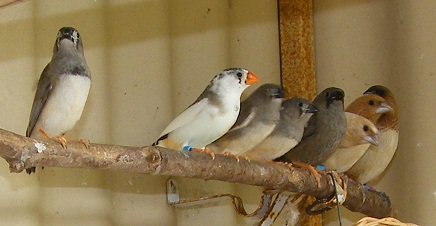
Normal Juvenile Zebras, Adult Pied Zebra, Charcoal Juvenile Zebra and adult Bengalese Finch's

Juvenile Male Normal Zebra Finch
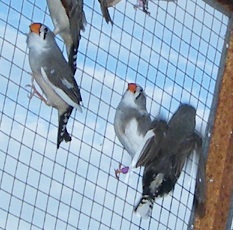
Mix of Zebra Finches
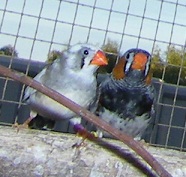
Pied Adult Zebra on left, Right juvenile male Charcoal X Normal Zebra male still coloring up